


Tightening Supply & Rising Tensions
UK Energy Market Update
June 2025
Market Summary
In June, EU gas storage levels rose steadily, reaching around 59% by month-end but still below the five-year average of 68%. Strong injections early in the month helped narrow the year-on-year gap, though concerns lingered over slower refill rates. In response, the EU agreed to extend gas storage rules through 2027, allowing more flexibility around the 90% target. Despite consistent injections and supportive policy changes, storage remained behind seasonal norms amid weak LNG flows and muted global demand.
Norwegian gas supplies faced significant planned and unplanned maintenance in June, reducing flows, especially to the UK. Curtailments peaked near 98 mcm/day, but stable demand and strong renewables helped limit market impact. By late June, maintenance wound down and exports began recovering, reaching their highest levels since early May.
The Israel-Iran conflict in June sharply increased geopolitical tensions, raising fears of disruptions to energy supplies through the Strait of Hormuz, a vital route for global LNG and oil exports. UK gas prices spiked amid concerns over supply security, while shipping routes saw caution with some tankers avoiding the area. Although no major supply interruptions occurred, Israeli gas exports to Egypt and Jordan were briefly halted before resuming. Diplomatic efforts resulted in a ceasefire, which helped ease market fears, leading to a retreat in prices as focus returned to normal market factors. Overall, the conflict caused significant but temporary volatility in UK energy markets.
Britain aims to link its carbon market with the EU’s emissions trading system to avoid the EU’s carbon border tariff starting next year, which could cost UK businesses around £800 million annually. However, experts say completing this linkage within seven months is unlikely, with full integration more realistically expected around 2028 to 2030 due to technical and regulatory challenges. The UK must align its rules on permit issuance, emissions caps, and auction processes with the EU, while also addressing differences such as the EU’s price-stabilizing reserve mechanism, which the UK currently lacks. Although both governments are committed to negotiating, the complexity of these adjustments means a swift agreement is improbable.
EDF has detected signs of stress corrosion at its Civaux-2 reactor, raising concerns due to past shutdowns from similar issues in 2022. While no defects are confirmed, the situation is being closely monitored. At the same time, rising river temperatures in eastern France, particularly near the Bugey plant, could lead to output cuts due to environmental limits on cooling water. As France is a key electricity exporter, reduced nuclear output could tighten regional supply and impact UK energy prices.
The UK government has committed £14.2 billion to the Sizewell C nuclear plant, raising its total investment to £17.8 billion to support energy security and climate goals. The project, expected to power 6 million homes, is majority-owned by the government, with EDF as a minority shareholder. Centrica is reportedly set to take a 15% stake, and Brookfield Asset Management is also in talks. Around £20 billion in funding is still needed, with a final investment decision expected before Parliament’s summer recess.
Net Zero News
The government is in danger of falling short of its clean power goals unless it significantly accelerates the delivery of energy infrastructure, according to a stark new report from the House of Lords Industry and Regulators Committee.
Sir Keir Starmer has stepped in on controversial net zero plans that risk pushing up power costs for homes and businesses in the South, sparking fears of a voter backlash.
Ten innovative UK-based AI projects have been named finalists for the second Manchester Prize, each presenting advanced solutions aimed at reducing energy bills and supporting the UK’s shift to clean energy.
The UK wind industry now supports over 55,000 jobs, including nearly 40,000 in offshore wind, according to a new report by RenewableUK and the Offshore Wind Industry Council — a 24% rise in offshore wind employment over the past two years.
The UK may be forced to import up to 80% of its oil and gas by the end of the decade unless the government supports increased domestic production, new analysis for Offshore Energies UK (OEUK) warns.
https://www.energylivenews.com/2025/06/23/well-be-importing-80-of-our-oil-and-gas-within-five-years/
The government has launched a bold 10-year strategy aimed at transforming the UK into a clean energy superpower, combining climate action with economic renewal. Central to the plan are commitments to create hundreds of thousands of skilled jobs, attract tens of billions in private investment, and provide more secure, affordable energy for homes and businesses.
Confidence in the UK’s Renewable Energy Guarantees of Origin (REGO) scheme is waning, as prices have plunged by 70% in just three months, according to Cornwall Insight’s latest Green Certificates Survey. Average REGO prices dropped from £2.56 in January to just £0.77 by April for the 2024–25 Fuel Mix Disclosure period, marking the sixth consecutive quarter of declines.
Offshore Energies UK (OEUK) has urged the new government to accelerate investment in homegrown energy, warning that meeting climate targets will require an “everything, everywhere, all at once” strategy for the energy transition.
The government has announced a new Industrial Strategy aimed at reducing electricity costs by up to 25% for over 7,000 energy-intensive businesses starting in 2027.
Electricity & Gas Prices
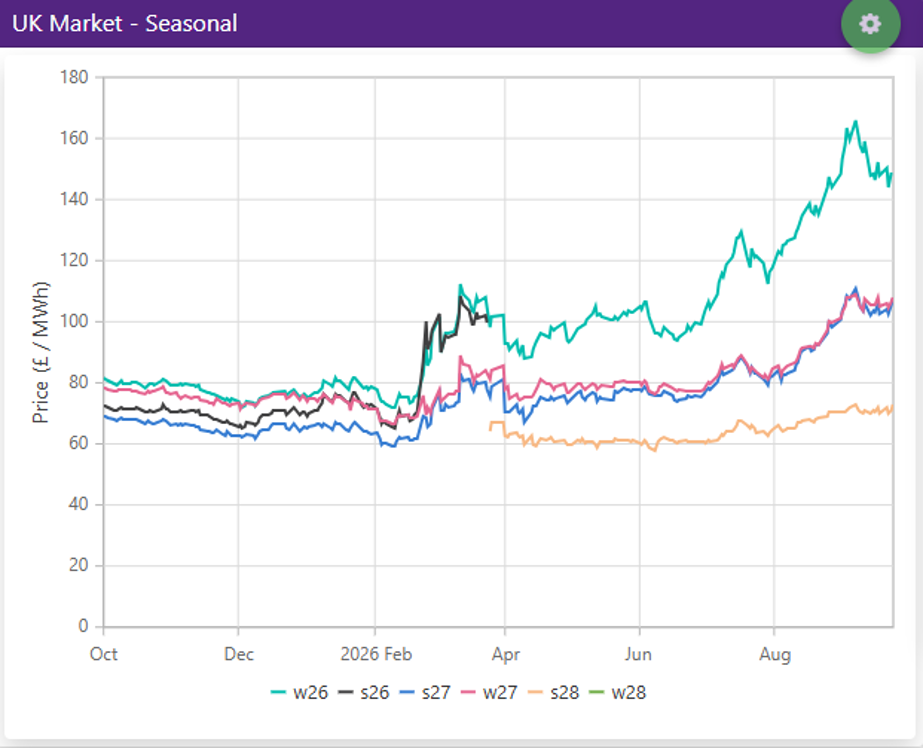
UK wholesale gas and power were highly volatile in June, driven by Middle East tensions that pushed front-season gas up 10% mid-month, lifting electricity prices. Concerns over LNG disruptions, low EU gas storage (59%), and major Norwegian outages added to the bullish tone. However, a ceasefire on 24 June triggered a sharp market reversal, helped by recovering flows, strong wind output (27%), and relaxed EU storage rules. By month-end, gas and power prices had fallen below May levels, despite the earlier spike—underscoring how geopolitical risks can quickly overshadow bearish fundamentals.


Flexible Purchasing
EPEX Price
Some of our flexible purchasing customers are buying on EPEX, a European auction for power. Because they auction every hour of each day, customers get the “market average” price as opposed to a fixed-term contract over e.g. a 12-month period. Being on this product means that you will pay the average of each day for the month and once the market falls the price will follow.
The EPEX price finished the month with an average of 6.74 p/kWh (commodity). With the non-commodity added to this, the overall rate will be around 17.64 p/kWh+.
Carbon Prices

European Union Allowance (EUA) prices averaged €72.67 per tonne in June, up 3.25 percent from May. Prices extended last month’s rally, briefly touching a three‑month peak of €76 per tonne in mid‑June.
The rise was fuelled by tighter energy‑market supply and a rebound in natural‑gas prices, both of which lifted demand for carbon permits. Bullish sentiment also grew amid European Commission talks on the Market Stability Reserve (MSR), while a modest uptick in industrial activity across Europe added further support. Toward month‑end, however, prices eased due to profit-taking by some investors and anticipation of higher auction volumes during the summer. The market now looks poised for a short‑term consolidation phase.
Oil Market

3rd - Oil prices held steady, bolstered by escalating geopolitical tensions as the conflict between Russia and Ukraine intensified and Iran appeared poised to reject a U.S. nuclear deal proposal that could ease sanctions on the major oil producer.
9th - Oil prices dipped following weak economic data from China but retained most of last week's gains, as investors looked ahead to U.S.-China trade talks in London later in the day, hoping a potential deal would improve the global economic outlook and support fuel demand.
13th - Oil prices surged over 9%, approaching multi-month highs after Israel carried out large-scale strikes on Iran, prompting retaliation and heightening concerns over potential disruptions to global oil supplies.
19th - Crude oil prices have climbed sharply in recent days, driven by escalating tensions near Iran’s major oil fields. According to the U.S. EIA, Iran ranks as the world’s seventh-largest oil producer. Since the onset of the latest conflict between Israel and Iran, the Brent Crude benchmark has risen more than 11%, based on ICE data.
24th - Oil prices fell to a two-week low after Israel accepted U.S. President Donald Trump’s ceasefire proposal with Iran, easing concerns over potential supply disruptions in the oil-rich Middle East.
30th - Oil prices remained steady as easing Middle East tensions offset market pressure from a potential OPEC+ output hike in August and ongoing uncertainty over global demand.
Get in Touch
Our team are independent energy advisors who provide competitive gas, electricity, and water prices for commercial businesses across the region.
Our complete energy management service also includes helping businesses to identify potential savings through energy audits, tax levy rebates and grant funding. We can also help you plan for Net Zero and achieve compliance with our in-house ESOS assessment service.
Contact us for a free initial consultation about your business energy.
0114 327 2645



Comments