


Markets Steady Amid Uncertainty
UK Energy Market Update
June 2026
Market Summary
EU gas storage continued its seasonal refill through June, rising from around 40% full at the end of May to approximately 49% by month end as inventories steadily rebuilt across the continent. Despite this progress, storage levels remained around 10 percentage points below the same point in 2025, reflecting the impact of stronger winter withdrawals and a slower refill season than in previous years. This deficit continued to raise concerns over the pace of replenishment ahead of Winter 2026, particularly given the importance of rebuilding reserves before seasonal demand increases. As a result, European gas markets remained sensitive to supply security concerns, geopolitical developments and competition for LNG cargoes.
Middle East tensions remained a key driver of global energy markets throughout June, with the conflict between the US and Iran escalating sharply during the first half of the month. Military exchanges around the Strait of Hormuz, including US strikes on Iranian targets and retaliatory Iranian attacks against US assets in the Gulf, heightened concerns over the security of a key global energy transit route and raised fears of disruption to LNG and oil flows. Sentiment improved later in the month following the announcement of a 60-day ceasefire agreement and the reopening of the Strait of Hormuz, easing immediate supply concerns. However, uncertainty in the region continued to support wholesale gas and power prices, with UK energy markets remaining sensitive to potential threats to LNG supply chains and international energy security.
The importance of LNG to European energy security continued to grow during June, with Europe relying on imported LNG to support storage refilling and replace lost Russian pipeline supplies. Expanding export capacity from major suppliers, particularly the US and Qatar, helped improve longer term supply confidence, although tensions in the Middle East continued to highlight the vulnerability of key LNG trade routes. For UK energy markets, this remained an important theme, with wholesale gas and power prices continuing to respond to global LNG availability and wider supply risks.
Periods of weaker renewable generation during June increased the UK's reliance on gas fired power stations, particularly during stretches of low wind output. Gas accounted for over 40% of the generation mix on several occasions during the month, while reduced wind generation resulted in higher grid carbon intensity and greater demand for gas fired power to balance the system. This dependence reinforced the link between wholesale gas and power markets, leaving UK electricity prices more exposed to movements in global gas markets and geopolitical supply risks.
EU efforts to reduce fossil fuel dependence gathered further momentum during June with the launch of the European Commission's Electrify Now initiative, designed to accelerate electrification across industry, transport and buildings. The programme aims to strengthen energy security by reducing reliance on imported fossil fuels while supporting the transition to a lower carbon energy system. For UK energy markets, the initiative highlights the broader European shift towards electrification, which is expected to drive future investment in renewable generation, storage and grid infrastructure.
Net Zero News
New research commissioned by 11 major energy trade organisations suggests strong public support for clean energy investment is boosting momentum for a faster move towards a lower carbon future. The report found that 63% of UK respondents believe clean power enhances the country's energy security.
A new ECIU report found that the UK's net zero economy supports 1.1 million jobs and contributes £100 billion to the national economy. The findings underline the sector's growing role in driving economic growth, investment and employment across the UK.
According to new research, almost half of gas producing nations have passed peak generation, while gas's share of global electricity production has declined for the fifth consecutive year.
Mars Chief Sustainability Officer Alastair Child says that, while the science behind sustainability remains unchanged, shifting economic conditions are leading businesses to place greater emphasis on its commercial value, resilience and competitiveness.
Climate Action Network Europe has warned that millions of Europeans could face energy poverty this summer as rising electricity costs and increasingly severe heatwaves make it harder to keep homes cool. The organisation says elevated gas driven power prices and ongoing volatility in global fossil fuel markets are worsening the risk.
An early forecast from the National Energy System Operator indicates Britain should have enough electricity capacity to meet winter demand.
A new international net zero standard could provide greater clarity and consistency around corporate climate commitments. The draft ISO 14060 Net Zero Standard is designed to establish a common framework for credible net zero action, helping organisations demonstrate and assess climate claims against a recognised global benchmark.
Research from the Small Business Institute (SBI) suggests sustainability remains a growing priority for SMEs, with 65% planning to increase their sustainability efforts over the next year and 45% having already stepped up their actions during the past 12 months.
A new assessment suggests that clean energy sources will supply around 83% of Britain's electricity by 2030 under current projections. While this falls short of the government's 95% clean power target, the expected increase in low carbon generation is still set to deliver significant reductions in energy bills and carbon emissions.
Electricity & Gas Prices
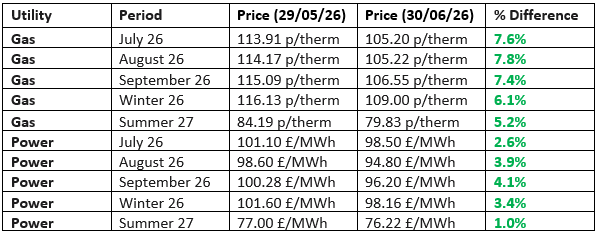
UK wholesale gas and electricity prices softened through June, with prices generally trending lower as easing geopolitical tensions reduced concerns over global LNG supply disruption. Early in the month, markets remained supported by uncertainty in the Middle East and lower European storage levels, but sentiment weakened as expectations of improved gas flows and the reopening of key shipping routes helped alleviate supply concerns. Additional downward pressure came from continued storage injections, improving supply availability and stronger renewable generation, which reduced demand for gas fired power generation. Overall, June was characterised by a more bearish market than May, as improving supply fundamentals and a reduction in geopolitical risk outweighed ongoing concerns around storage and energy security.

Oil Market

Brent crude prices remained highly volatile through June but trended lower overall, as the geopolitical risk premium that had supported prices in previous months gradually unwound. Early in the month, the market continued to find support from ongoing uncertainty in the Middle East, with concerns over regional oil exports, shipping disruption and tight global inventories maintaining fears of constrained supply. OPEC+ production discipline and continued inventory draws also helped underpin prices despite signs of weakening market fundamentals.
As the month progressed, however, bearish drivers became increasingly dominant. Growing confidence that tensions in the Middle East would ease, alongside expectations of improved export flows and reduced disruption to key shipping routes, led to a significant reduction in supply concerns. At the same time, global demand expectations were revised lower as weaker economic activity and softer fuel consumption weighed on sentiment. Additional OPEC+ supply and expectations of a more balanced market further contributed to downward pressure on prices.
Overall, June was characterised by a shift from supply focused concerns towards a weaker demand outlook, as easing geopolitical tensions and improving supply expectations outweighed the previously dominant risk premium. While oil markets remained sensitive to developments in the Middle East, Brent crude moved lower through the month as confidence in improving market balances increased.
Carbon Prices

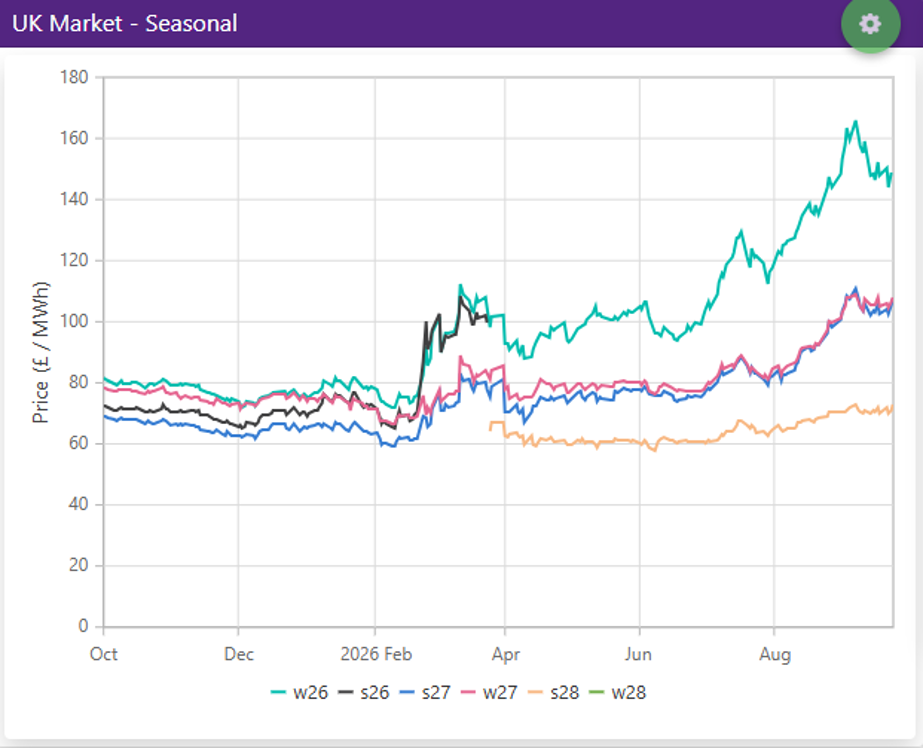
EUA carbon prices strengthened further through June, with the monthly average rising to around €79 per tonne, compared with approximately €77 to €78 per tonne in May, reflecting a broadly firmer trend despite periods of volatility. Prices were supported by strength in European power markets and ongoing expectations of tighter long-term supply within the EU ETS, while market participants also continued to position ahead of the European Commission's upcoming review of the scheme and wider carbon market reforms.
As the month progressed, prices gained additional support from expectations surrounding potential EU ETS policy changes and speculation over closer integration between the UK and EU carbon markets. However, bullish momentum was periodically limited by uncertainty over possible measures to ease carbon costs for European industry, alongside concerns over weaker industrial activity and lower compliance demand from energy intensive sectors. Easing geopolitical tensions and softer energy market sentiment also contributed to intermittent profit taking.
Overall, June was characterised by a modest upward trend compared with May, with carbon markets benefiting from regulatory expectations and continued confidence in tighter future allowance availability, while remaining sensitive to industrial demand, energy market movements and evolving policy discussions.
Get in Touch
Our team are independent energy advisors who provide competitive gas, electricity, and water prices for commercial businesses across the region.
Our complete energy management service also includes helping businesses to identify potential savings through energy audits, tax levy rebates and grant funding. We can also help you plan for Net Zero and achieve compliance with our in-house ESOS assessment service.
Contact us for a free initial consultation about your business energy.
0114 327 2645



Comments