


Winter Supply Concerns Support Markets
UK Energy Market Update
October 2026
Market Summary
EU gas storage edged higher during October, with inventories rising from around 71% full at the start of the month to approximately 74.5% by month end. Storage injections remained positive for much of the month, although replenishment slowed as seasonal demand increased and several countries recorded net withdrawals towards month end. Despite the monthly increase, storage levels finished the injection season well below both last year's position and longer-term seasonal averages, highlighting the more challenging refill environment seen throughout 2026. With European inventories remaining below historical norms and global competition for LNG cargoes ongoing, concerns over winter supply security continued to provide underlying support for gas prices.
Middle East tensions continued to influence global energy markets during October, as ongoing security concerns in and around the Strait of Hormuz renewed fears over the reliability of LNG and oil exports from the Gulf. While some energy shipments continued to move through the region, reports of increased attacks on commercial shipping during the month reinforced concerns that supply disruptions could persist into the winter period. LNG exports from key producers including Qatar remained well below pre conflict levels, limiting global LNG availability and maintaining competition for cargoes between Europe and Asia. As a result, geopolitical risk remained an important source of support for UK wholesale gas and power prices, with markets remaining sensitive to any further escalation that could disrupt global energy supply chains.
The UK government's approval of the Jackdaw gas field was one of the most significant domestic energy developments during October. The project, located in the North Sea and operated by Adura, a joint venture between Shell and Equinor, received consent to begin operations following a revised approval process. At peak output, the field is expected to increase UK gas production by around 6% and support domestic supply for up to 11 years, with production anticipated to commence this winter. While the development is unlikely to have a material impact on wholesale gas prices, due to the UK's continued exposure to international energy markets, supporters argue it will strengthen energy security and reduce import dependence. The decision also reignited debate over the role of domestic oil and gas production in the UK's transition towards net zero.
Alongside approval of the Jackdaw gas field, the government announced plans to establish a £2 billion Energy Wealth Fund, designed to reinvest revenues from North Sea oil and gas production into renewable and low carbon energy projects. The initiative reflects the government's efforts to balance support for domestic energy production with longer term decarbonisation objectives. While the fund is unlikely to directly influence wholesale energy prices, it represents a notable development in the UK's energy strategy and the future role of North Sea resources in the transition to a lower carbon economy.
Norwegian gas supply improved during October following the completion of seasonal maintenance programmes, with exports running ahead of 2025 levels. As Europe's largest supplier of pipeline gas, Norway's strong export performance provided a valuable source of stability for the market and helped offset some of the pressures associated with lower storage levels and ongoing LNG market disruption.
Net Zero News
The UK now has its first synthetic natural gas (SNG) manufacturing facility, the first of its kind in the world and one of the largest new manufacturing developments to open in London in more than 20 years.
Ofgem has allocated £16.2 million to 16 projects to help upgrade and transform the UK's energy networks.
A recent report found that 74% of UK businesses believe managing their energy has become more complex, with 43% saying this is delaying investment decisions. Nearly half also reported difficulties with budgeting and long-term planning.
What is Jackdaw? And why does it matter
With the Jackdaw gas field now approved by the government, industry leaders have begun sharing their views.
The government has been urged to move the remaining costs of energy transition policies from electricity bills to gas bills.
Construction of a 600MWh battery storage system alongside the Hornsea 3 converter station has been completed, creating one of Europe's largest battery energy storage facilities with enough capacity to power around 80,000 UK homes for a day.
NESO and National Gas have published their winter outlook reports, forecasting that the UK will have sufficient gas and electricity supplies to meet demand throughout the winter.
Chancellor John Healey has reaffirmed the government's "unshakable" commitment to the UK's 2030 clean power target in his Autumn Budget speech.
Industry reacts to the Autumn Budget's impact on energy
https://www.energylivenews.com/2026/10/29/did-autumn-budget-hit-the-mark-for-energy-industry-reacts/
Electricity & Gas Prices
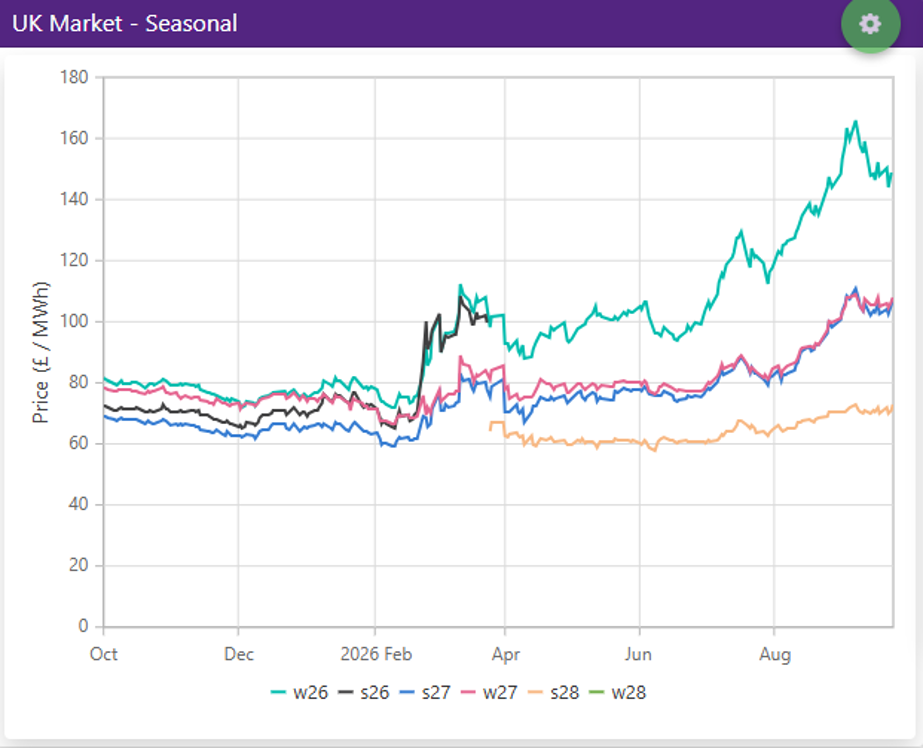
UK wholesale gas and electricity prices rose sharply throughout October, extending the gains recorded in September. Continued concerns over winter supply security remained the dominant market driver, with disruption to global LNG markets, strong competition for cargoes and lower than average European gas storage levels supporting gas prices. In turn, higher gas costs, rising carbon prices and broader energy security concerns drove electricity markets higher, with both commodities remaining on a firmly upward trajectory throughout the month. Despite ongoing volatility, market sentiment remained strongly bullish overall, with both gas and electricity forward contracts ending October substantially higher than where they began.


Oil Market

Brent crude prices continued to strengthen throughout October, extending the gains recorded in September and reaching their highest levels in several months. After beginning the month around the $100/bbl mark, prices trended steadily higher before accelerating sharply in the second half of the month, with Brent briefly trading above $115/bbl. The rally was driven primarily by heightened geopolitical tensions in the Middle East, as renewed attacks on Saudi energy infrastructure and concerns over potential disruptions to regional export flows prompted traders to build a substantial risk premium into the market. Tight global inventories, elevated freight costs and continued strength in refined product markets, particularly diesel ahead of the winter season, provided further support.
As the month progressed, market participants weighed signs of recovering Gulf oil exports against the possibility of further escalation in the region. OPEC+ production discipline and ongoing uncertainty surrounding supply security helped maintain bullish market sentiment, while relatively low inventory levels reinforced concerns over the availability of prompt supplies. However, concerns over weaker global economic growth and softer demand expectations prevented even stronger gains, with several market observers continuing to highlight the risk of slower oil consumption across key economies.
Overall, October was characterised by a continuation of the upward momentum established in late September. While demand concerns and improving supply flows provided some counterbalance, geopolitical uncertainty, supply security risks and relatively tight market fundamentals remained the dominant influences on pricing, ensuring oil prices stayed elevated throughout the month.
Carbon Prices

UK carbon prices strengthened through October, with the monthly average increasing to around £63.8 per tonne, compared with approximately £60.0 per tonne in September. Prices initially moved higher on the back of improving sentiment across wider energy and commodity markets before extending gains through much of the month. Market participants continued to focus on the long-term tightening trajectory of the UK ETS, with expanding compliance obligations, including the recent inclusion of domestic maritime emissions, expected to support future demand for allowances.
Some volatility emerged during the middle of the month as traders took profits following the strong rally from September levels. However, prices subsequently recovered, supported by confidence in the long-term fundamentals of the scheme and ongoing expectations that UK carbon policy will continue to play a central role in delivering decarbonisation targets. Discussion around potential future alignment with the EU ETS also provided underlying support to market sentiment.
Overall, October was characterised by a clear upward trend compared with September. While broader economic uncertainty and cautious industrial demand limited more substantial gains, expectations of tighter future carbon constraints, expanding compliance demand and continued policy support for emissions trading provided a strong foundation for higher prices throughout the month.
Get in Touch
Our team are independent energy advisors who provide competitive gas, electricity, and water prices for commercial businesses across the region.
Our complete energy management service also includes helping businesses to identify potential savings through energy audits, tax levy rebates and grant funding. We can also help you plan for Net Zero and achieve compliance with our in-house ESOS assessment service.
Contact us for a free initial consultation about your business energy.
0114 327 2645



Comments